Skip to content ↓

Sixth Form News

Page 7

  • Chemistry Race

    Published 06/03/24

    Five of our top Chemistry students; Ethan Abbate, Scarlett Basquil, Leo Dhunnoockchand, Nathan Kuhn and Adrianne Yu-Mason were selected to attend the prestigious Chemistry Race held at the world-renowned University of Cambridge. 


    This Chemistry Race is a new chemistry competition in the UK for teams of 3-5 Sixth Form students organised by students at the Universities of Cambridge and Oxford. The race originated as a Czech competition Chemiklání at the University of Pardubice in 2015.

    The teams race against each other in solving chemistry problems; whoever gets the most points within the time limit wins! Our Year 12 students competed against Year 13 students and attained a respectable position on the leader board.

    Dr Numbere, Chemistry Department

    During the first weekend of half-term, a team of Sixth Form students, including myself, went to the University of Cambridge to take part in the annual Chemistry Race that was also taking place in Oxford as well. It was very exciting being in the lecture halls competing against other teams who were just as passionate about Chemistry - and winning! The BGS team worked hard to compete as many questions as possible in the two-hour time limit, helping each other along the way. And although we didn’t win, we had a fantastic time solving questions and having fun together. Overall, it was an amazing experience.

    Scarlett Basquil, Year 12

    During the half-term holidays, I, alongside four other Year 12 students, had the privilege of attending the Chemistry Race in Cambridge where we would compete against around 60 teams of 4–5 people. The venue for the competition was in a science lecture room, which really gave me an insight into what it is like doing a science course at Cambridge University. The competition lasted two hours in which we had to answer as many questions as possible, but had to get a question correct in order to move on to the next one, which certainly was a challenge despite our combined knowledge of chemistry. All in all, it was a very enjoyable experience and I especially appreciated being able to meet people from other schools who were also looking to further their knowledge of science. I hope that BGS will get to compete in the Chemistry Race next year as it is a superb opportunity for any keen chemist.

    Nathan Kuhn, Year 12

    Read More
  • British Science Week 2024

    Published 06/03/24
    Chemistry in Action

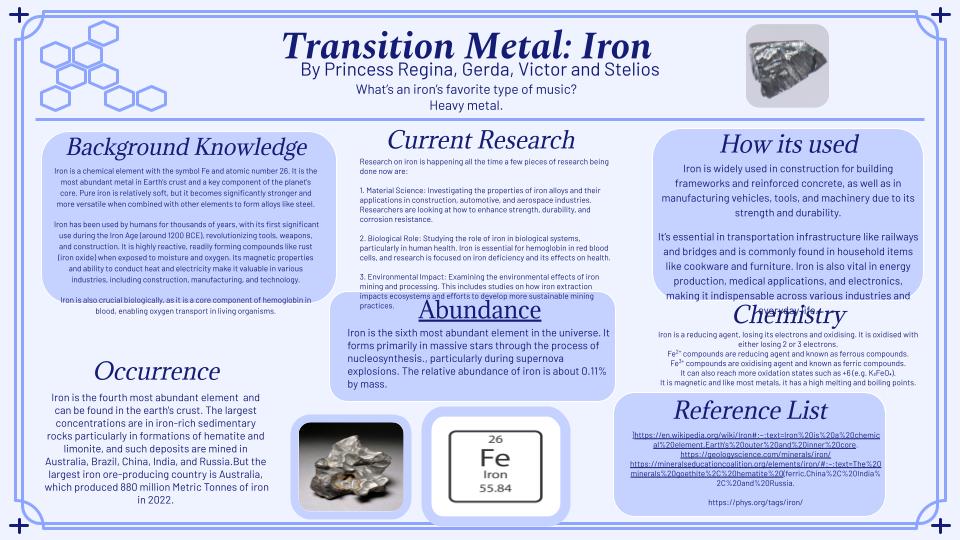
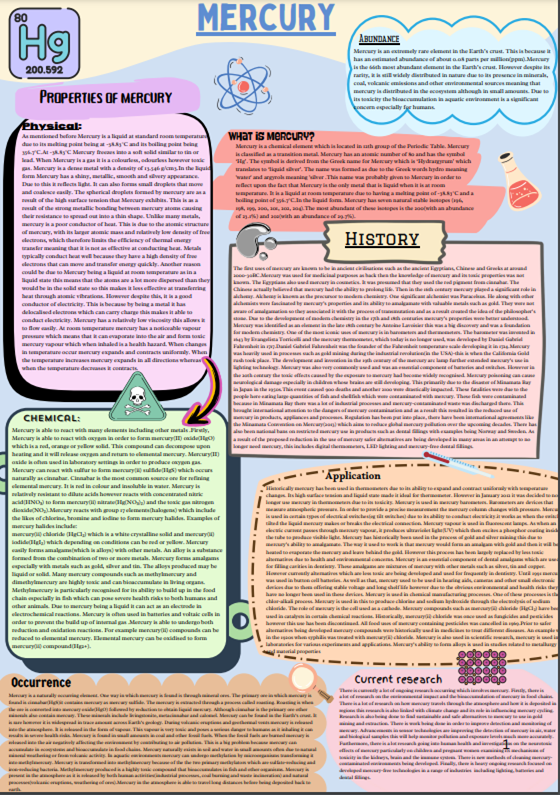
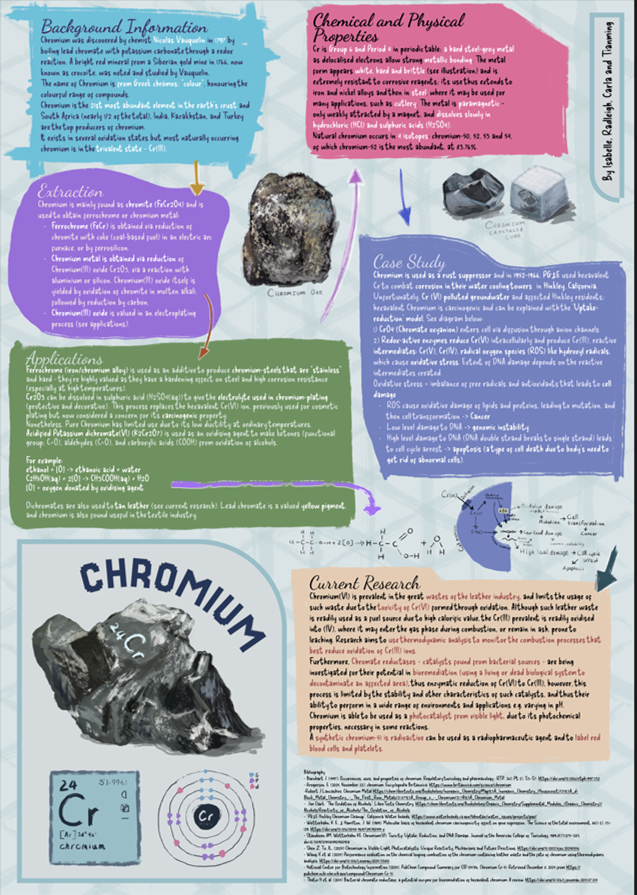
    On the 29th February, myself and a group of higher chemistry students went to the Chemistry in Action lecture at the Emmanuel Centre in London. In this lecture we gained an insight into multiple fields of chemistry that we could go into in the future and their current ideas and innovations in solving problems with society, the environment and industry.

    We learnt about the current progress in making batteries more sustainable by finding more environmentally friendly alternatives for their components while also trying to increase their effectiveness in supplying and storing energy.

    In nuclear chemistry we were informed about the ways that nuclear waste can be recycled in order to decrease the amount of high level nuclear waste. Some fission products can be used in medicine to target metastatic cancer cells and in space exploration in the form of nuclear batteries. They debunked misconceptions and explained in detail how nuclear waste is disposed of and how rigorous safety regulations are, which definitely helped ease a lot of our fears about the disposal of nuclear waste affecting the environment.

    Then there was a panel of Chemistry graduates who gave their experiences in university and career decisions. We could go into chemical engineering, with study years abroad, and write a PhD on a cell's chemical signals or work in industry in analytical chemistry and do an iterated Masters, or even do an apprenticeship and specialise in crystallisation of medicine. What connected all of their experiences together was a love and curiosity for chemistry.

    Since important tests are coming soon, a professional chemistry marker explained and clarified the questions on the papers and helped us avoid common errors in regard to the command terms in the question. As usual, always read the question.

    An “Accidental” Material Chemist explained how she became passionate about material chemistry through opportunities offered by university and international competitions, pushing science to its limits. She also wrote a PhD on creating a type of composite pellet that would be viable as a sustainable container of hydrogen to power cars, which involved lots of hands-on practical work and exploring different ratios of material to see new properties.

    Finally, we learnt about the ways that synthetic chemistry can help diseases like snake bites in the tropics (a commonly disregarded illness). Current treatments include antivenoms which rely on knowing the species of snake for a specific medicine or having to deal with multiple horrible side effects from receiving many different antivenoms. Antivenoms are also really expensive, hard to synthesise and hard to transport due to their temperature requirements, so chemists have been trying to synthesise glycopolymers in order to replicate the properties of antivenoms in order to diagnose and treat snake bites while also increasing accessibility of healthcare to all people.

    This was a fantastic learning experience which broadened our horizons with what we can do with the field of chemistry in the future.       

    Adrianne Yu-Mason, Year 12

    This was a fantastic introduction to British Science Week which commences on Friday 8th March, so please look out for more STEM events organised by the Science Department.

    Mrs Moore, Head of Science

    Read More
  • 1st XI Football - Kent League Champions!

    Published 28/02/24

    Bexley Grammar School 1st XI were confirmed as Champions of the league after beating Beths 3-2 on Wednesday 21st February. Thanks to an epic 2-1 win away at Gravesend in January with only 10 men (goals from Kyran Forbes and Liam Hutchings, brilliantly assisted by Riley Woods), BGS had their title chances in their own hands when they travelled to 2nd place Beths. Anything less than 3 points would have meant their bitter rivals walked away with the League instead.

    Year 11 North Kent Cup Final (2022)

    Having arrived at Beths, there was drama over the kick-off, as the pitches were playable, but it seemed that the opposition was nowhere to be seen. Thankfully, they turned up, slightly late, and the game was on. Beths started strongly and took an early lead, before Obi Igwe curled in a beauty with his left foot (the least he could do after missing a previous game!), before he then set up Riley Boyle to put BGS 2-1 up in a dominant first half display, the defence dealing with the Beths attacks, Dexter Gilchrist and Liam Hutchings putting in crunching tackles, Leo Ridge rampaging down the right-hand side and Miko leading the line like an old-fashioned number 9. Chances came and went, but as the second half started, former BGS student Arinze led Beths revival as they equalised with just over 20 minutes to go, and the title was slipping away from our hands. However, a brilliant interception high up from Riley Woods saw him with a chance to cross for Mason McKenna to scoop the ball home for a well-deserved winner with just under 10 minutes to go. Obi hit the post late on, but the boys comfortably held on, thanks in part to Aidan Wicks’ safe hands and game management, to secure BGS’ first ever 1st XI league title. A brilliant performance, expertly led by captain Oli Knight. Mal Turner was a standout player, causing havoc for the Beths defence with his clever positioning helping to create space for the forwards, but everyone in the squad played their part.

    Year 8 North Kent Cup Final (2019)

    It’s been a pleasure to have coached the Year 13s since they were in Year 7. They’ve been a fantastic bunch of people, and I’ve enjoyed every high and low with them over the years. We’ve had a number of cup finals (fewer than we should have due to Covid), but this victory is no more than they deserve for their hard work, dedication and attitude over the years. A credit to all the squad, who have contributed to this success throughout the school year!

    The following players have made appearances this year: Aidan Wicks (GK), Oli Knight (C), Liam Hutchings, Mason McKenna, Leo Ridge, Dillon Walton, Riley Woods, Tayo Odumusi, Dexter Gilchrist, Jed Baulch, Hayden Ouattara, Mal Turner, Riley Boyle, Obi Igwe, Miko Bielski, Kyran Forbes, Jack Ristow, Sam Hood (GK), George Bell, Loic Ndoutoumou, JJ Adeduntun

    Mr Martin, Year 13 Football Coach

     Year 7 (2018)

    I cannot believe it’s over already. It seems as if just a couple of days ago I was turning up as a nervous Year 7 to the school football team trials. What a journey we have all come on as a team. I’ve had a great time playing for the school football team and the players, and we would all like to thank Mr Martin for the effort he has put in to make this incredible journey happen for us. From training before school to away matches in Canterbury, Mr Martin has put up with us for 7 Years, and we cannot thank him enough. This league win in our last game was a fantastic way to sign off. We played some of the best football we have ever played, with lots of rotations, clever movement and intricate passes all over the pitch. Now the only thing left we have to win is the Sixth Form vs teachers match later on this year. I think we have it in the bag. I’ve heard rumours round the school saying that we were the Bexley Grammar golden era!

    Well done to all the boys who have played this year and, yet again, thank you to Mr Martin!

    Oli Knight, Year 13

    Read More
  • Watch out for the Year 12 Young Enterprise Team!

    Published 07/02/24

    The BGS Young Enterprise team has been working hard to create our business product. Our dedicated team of young innovators have developed high-quality candles. However, our candles are not like any other candles…

    Introducing ‘Illumina’, mood-sensory candles prepped with Spotify QR codes that can conveniently transport you to carefully curated playlists that link to the mood of the candle you buy. Scan, play and let the playlist match your candle's mood! 

    Some examples of these moods are: Joy, Calm, Nostalgia, Energise and Focus.  Therefore, give you a reason to light a candle at every moment! For when you’re bursting with energy or when you need a moment to relax or even if you need instrumental sound to help you revise. 

    Each candle is a work of art, elegantly crafted with a soft, pastel colour range and, most importantly, access to playlists perfectly synced to your selected mood. 

    Some extra dates if you’re interested:

    Old Spitalfields Market on Tuesday 27th February 
    Greenwich Market on Wednesday 13th March

    BGS Young Enterprise Marketing Team

    Read More
  • Young Enterprise Update

    Published 31/01/24

    The Young Enterprise team has been busy creating more candles for their upcoming market stalls. If you’re in the area, pop in and see them at Old Spitalfields market on Tuesday 27th February or Greenwich Market on Wednesday 13th March.

    The team has been lucky enough to benefit from the guidance of their business advisor, ex-BGS student Henry Wong. Henry was once the Managing Director of a Young Enterprise team here and is now a Developed Markets Equity Analyst at HSBC. He has been meeting with the team on a regular basis to get updates, help with goal setting and guide the team. Henry is pictured below with some of the team at one of their team meetings.

    Mrs Harris, Head of Business Studies & Economics

    Read More
  • The Experiences of Women in WWI​​​​​​​

    Published 08/11/23

    When we commemorate those who lost their lives in the First World War and other conflicts over the course of the 20th century on 11th November at 11.00am (the time when this conflict came to an end), this has come to be a moment when we reflect upon the nine million soldiers and seven million civilians who died in the “Great War” of 1914 to 1918. When stories of heroism are mentioned, most focus on the brave men who fought in the trenches.

    Women were not allowed in military service at this time and their contributions and experiences in the conflict, whether in terms of working in munitions factories, helping wounded soldiers or taking an active part in other aspects of war work, has often been neglected.

    The Experiences of Vera Brittain

    Born in 1893, Vera Brittain in Newcastle-under-Lyme in Staffordshire would have a distinguished career as a writer and feminist during the 20th century, with her ideas and beliefs being very much shaped by the experiences she had as a young woman during World War I which she wrote about in “Testament of Youth”.

    Early Life and Background

    Vera Brittain came from a comfortable background, growing up with younger brother Edward in Macclesfield and Buxton before attending boarding school in Surrey from the age of 13, where she did very well & wanted to continue with her studies at university, although this was opposed by her parents for two years. In 1914, Vera was finally allowed to go to university, becoming an undergraduate at Somerville College, Oxford, where she read English Literature, although to Vera this came to be seen as not being a priority over the course of 1914 to 1915 with the outbreak of World War I and the enlistment of her male contemporaries.

    Vera Brittain and the Voluntary Aid Detachment

    In 1915, Vera took the decision to delay her studies to work as a Voluntary Aid Detachment nurse, which was disapproved of by her parents in the same way as her desire to go to university had been and, over the course of the next three years, she served in hospitals in Buxton, London, Malta, and France. Part of the reason for Vera deciding to leave Oxford and join the VAD was the fact that her younger brother Edward had enlisted in the armed forces along with his friends from school, Roland Leighton (to whom Vera became engaged), Victor Richardson and Geoffrey Thurlow, all of whom she developed close emotional ties.

    Tragedy and Loss in World War I

    Tragically, in December 1915, Roland Leighton was killed by snipers on the Western Front while attempting to repair barbed wire on the front line in France and, as a strategy of dealing with her grief, Vera concentrated on her work as a nurse and helping wounded soldiers, especially as her brother Edward was going to France. Over the course of 1916, Vera kept in touch with her brother Edward, who was injured at the Battle of the Somme, and Victor Richardson and Geoffrey Thurlow, who were also injured out of the conflict, before Thurlow died in military action in April 1917 and Richardson as a result of his injuries in June of the same year.

    The Death of Edward Brittain

    During all of this time, Vera continued to serve with the VAD, being stationed in France and Malta, keeping in touch with brother Edward on a regular basis through letters, particularly as he was moved from the Western Front in France after the battle of Ypres (Passchendaele), to the Italian Front.  In June 1918, Edward Brittain led his men on a counterattack against enemy Austrian forces on the front line after suffering heavy bombardment, but was shot through the head by a sniper & died instantaneously after having survived so many other attacks in the war.

    Vera Brittain and the Writing of “Testament of Youth”

    As a result of her experiences as a nurse in the Voluntary Aid Detachment & the deaths of her brother, fiancé and two close associates (Edward, Roland, Victor, and Geoffrey), Vera became a committed pacifist following the end of the war in 1918, writing up her experiences of this time in “Testament of Youth”. After the war, Vera returned to Oxford to complete her studies and, although she switched from English Literature to History, she went on to become an acclaimed writer, although the poem “Perhaps” which she wrote following the death of Roland Leighton in 1915 & dedicated to him remains a powerful epitaph to all loss in war.

    Vera Brittain and “Perhaps”

    Although Brittain did get married and have children during the 1920s, it is widely believed that the tragedies of the deaths of Roland Leighton, Edward Brittain, Victor Richardson and Geoffrey Thurlow remained with her all her life until her death in 1970, especially the death of Roland Leighton as indicated in “Perhaps”.

    “Perhaps some day the sun will shine again,
    And I shall see that still the skies are blue.
    And feel once more I do not live in vain,
    Although bereft of You.


    Perhaps the golden meadows at my feet
    Will make the sunny hours of Spring seem gay.
    And I shall find the white May blossoms sweet,
    Though You have passed away.

    Perhaps the summer woods will shimmer bright,

    And crimson roses once again be fair,
    And autumn harvest fields a rich delight,
    Although You are not there.

    Perhaps some day I shall not shrink in pain
    To see the passing of the dying year,
    And listen to Christmas songs again,
    Although You cannot hear.

    But, though kind Time may many joys renew,
    There is one greatest joy I shall not know
    Again, because my heart for loss of You
    Was broken, long ago.”

    The Experiences of Elsie Inglis

    Eliza “Elsie” Inglis was born in 1864 in India, which at the time formed part of the British Empire, where her father was a magistrate who worked for the Indian Civil Service and, over the course of her life, would qualify as a doctor and become a medical surgeon, both of which were highly unusual for women at this time.

    Elsie Inglis and Challenging the Medical Establishment

    On the retirement of her father from the Indian Civil Service, Elsie returned to Britain, settling in Scotland, which was the home of the family, and in 1887, following the completion of her formal education, she started her studies at the Edinburgh School of Medicine for Women opened by Dr Sophia Jex-Blake. After her graduation in 1892, Elsie gained a job at the New Hospital for Women in London, set up by Elizabeth Garrett Anderson, before returning to Edinburgh in 1894 to work in several medical institutions in the city during the period up to the outbreak of the First World War in 1914.

    Elsie Inglis and Challenging the Military and Political Establishment

    Although Elsie was over 50 by the time the conflict started, this would be the part of her life to which she would make the greatest contribution, setting up the Scottish Women’s Hospitals for Foreign Service Commission to provide medical support for the British Armed Forces fighting in Europe. In spite of considerable opposition and a lack of financial support from the British authorities, Inglis was able to send 14 all-female teams of doctors, nurses and technical support teams to Belgium, France, Serbia and Russia, which was very remarkable after originally being told “my good lady go home and sit still”.

    Elsie Inglis and her Contribution towards Medical Treatment in the War

    Elsie herself went to support the war on the Serbian Front in Southeastern Europe, working to improve hygiene amongst the soldiers, resulting in outbreaks of typhus and other epidemics being reduced significantly, although she was captured by German and Austrian forces and repatriated to Britain in 1916. The experiences Elsie faced in Serbia did not deter her from entering conflict zones and, in the same year, headed for the Russian Front in Eastern Europe and set up a hospital at Braila in Romania in which just 7 doctors, including herself, came to be responsible for treating 11,000 wounded soldiers and sailors.

    The Death and Impact of Elsie Inglis

    In 1917 Elsie was forced to return to Britain, having contracted bowel cancer and died shortly after arriving back in the country, although by this time her efforts in the war had been recognised by politicians in Britain and Serbia and in the latter she became the first woman to hold the Serbian Order of the White Eagle. After the death of Inglis in 1917 a memorial fountain was constructed in the town of Mladenovac in Serbia where her hospital had been set up during World War I and had helped save the lives of many Serbian soldiers fighting for the Allies against Germany and Austria in the conflict.

    The Experiences of Flora Sandes

    Flora Sandes was born in 1876 and, during her early life, enjoyed various outdoor pursuits such as riding and shooting and even learned to drive a car during the first decade of the 20th century, with all of these activities being against conventions at the time and what women were expected to do with their time.

    Flora Sandes before the First World War

    After she had completed her formal education at school, Flora trained with the First Aid Nursing Yeomanry (FANY), which was founded in 1907 as an all-women mounted paramilitary organisation in which its members learned first aid as well as horsemanship, together with military aspects such as signalling and drill. In 1910, Flora left the First Aid Nursing Yeomanry and helped establish a new organisation called the Women’s Sick and Wounded Convoy Corps with its purpose being to assist soldiers in war zones, and in 1912 it saw service in Bulgaria and Serbia during the First Balkan War.

    Nursing and Ambulance Driving in Serbia

    With the outbreak of the First World War in 1914, Flora volunteered to become a nurse, but she was rejected because of a lack of qualifications and instead joined a St John Ambulance unit and left Britain for Serbia on 12th August with 36 women to try and assist the crisis which had developed in this part of the war. On arriving at Kragujevac in Serbia, which was a base for the Serbian army which was attempting to prevent the Austrian army from conquering the country, Flora joined the Serbian Red Cross and became a nurse and ambulance driver providing medical assistance to injured soldiers in the conflict.

    Flora Sandes and the Serbian Army

    Inspired by some of the Serbian soldiers whom she met, it was suggested to her by them that she was wasted as a nurse and that she should enlist as a soldier and during the course of 1915 she attempted to get to the front line and eventually joined the ambulance of the Second Serbian Regiment at Babuna Pass. Following a Serbian retreat through Albania as a result of an Austrian offensive, all the other ambulance staff either fled or were killed and, as Flora could no longer make herself useful as a nurse, she was enrolled as a private in the Serbian army and before long proved herself effective, being promoted to corporal.

    The Decoration of Flora Sandes for her Bravery

    In 1916, Flora was seriously wounded by a grenade during a Serbian attack after displaying considerable bravery for which she was rewarded with the Order of the Karadorde’s Star, which was the highest decoration of the Serbian military, and was promoted to the rank of sergeant major, receiving a number of medals. As Flora was unable to fight, she wrote her autobiography on her experiences and helped raise funds for the Serbian Army as well as running a hospital for injured Serbian soldiers, and after the war, a law was passed in Serbia making Flora Sandes the first female commissioned officer in the army.

    Flora Sandes after World War I

    After the war, Flora married a Russian émigré from the Revolution of 1917 and the couple lived in France for a time before returning to Serbia, which was now part of the new country of Yugoslavia, although after the death of her husband in 1941, Flora returned to live in Britain, where she died in 1956. Flora Sandes is unique in the sense that she remains the only British woman to officially serve as a soldier during the First World War, breaking all the rules and protocols of the time regarding the role of women in society and in conflict and successfully challenging the British government, which did not want her to serve.

    Mr Goodall, Head of History

    Harold Gillies:
    A local Revolutionary

    The Early life of Gillies           
    • Harold Delf Gillies was born on the 17th of June 1882, in Dunedin - a city on the southeastern coast of New Zealand’s Southern Island.
    • The son of a parliamentary member, Gillies’ early life was marked by privilege and curiosity - having attended the Wanganui Collegiate school in his Secondary School years, in which he competed in cricket, golf and rowing, before eventually commencing his medical studies at Caius College, Cambridge.
    • Upon graduating, he soon completed clinical training at St. Bartholomew’s Hospital in London under Ear, Nose and Throat (ENT) Surgeon Milsom Rees - eventually receiving his medical degree and becoming a practising physician.
    The Emergence of a Problem
    • Upon the outbreak of the Great War in July 1914, Gillies was still serving under Rees, until he began volunteering with and serving in the Royal Army Medical Corps (RAMC) in 1915. Eventually, he was stationed in France as a Surgeon General: the highest rank that could be bestowed upon a Regimental Medical Officer.
    • It was during his time in France that Gillies was introduced to the ever-increasing severity of facial wounds sustained by those fighting in the War: an increase indubitably a result of the emergence of new forms of weaponry.
    • Prior to the First World War, most injuries sustained in battle were caused by those of firearms or blades - often posing little harm to many soldiers, who were simply content with being lucky enough to escape alive.
    • Yet, with the Great War, followed the introduction of extensive, lethal weaponry: Heavy Artillery and Munitions, Machine Guns and the onset of Poison Gases (Notably Chlorine, which was first employed by the Germans at the Second battle of Ypres in April 1915) inflicted facial injuries to an unfathomable scale.
    • Shells stuffed with shrapnel were arguably the most significant cause of traumatic injury - piercing through the flesh of a cheek with ease.
    • These injuries were also exacerbated due to the lack of early treatment: many of these wounds were impossible to treat on the front line, forcing many surgeons to haphazardly stitch wounds together that, once healed, would stretch and distort the face - rendering some men unable to eat or drink or with gaping facial holes.
    The Queen’s Hospital
    • Gillies returned to England in 1916, and began to set up a ward for facial injuries in Cambridge. On the 1st of July 1916 - the first day of the notorious “Battle of the Somme” - Gillies realised that his Hospital was without both the beds and space needed to treat those wounded.
    • As a result, Gillies persuaded his medical officials to establish a larger facility, with specialised surgeons and equipment, in order to make scientific advances and treat patients with facial scarring more effectively.
    • His requests were met, and in 1917 “The Queen’s Hospital” was established as the world’s first ever hospital dedicated solely to the treatment of facial injuries in our local town of Sidcup, (then) Kent - which endeavoured to reconstruct the faces of wounded men in order to allow them to live as normal life as possible.
    “Skin Grafting” and Surgical Marvel
    • Gillies realised that the best way to treat those with facial injury was to shift healthy tissues back to their natural positions. Then, any areas that were without tissue could be reconstructed using pieces of healthy skin from elsewhere on the body - a practice known as a ‘Skin Graft’.
    • Usually, most skin grafts involve taking a flap of skin elsewhere (known as a “Pedicle”) and wrapping it around the wound without severing the flap’s connection to the body. This traditional technique was successfully performed in 1917 on Walter Yeo (right), a naval officer who had lost both eyelids in 1916 at the Battle of Jutland.

    Achievements and Legacy

    Dubbed the ‘Father of Plastic Surgery’ for his groundbreaking techniques, Gillies revolutionised the way in which plastic surgery was perceived and used for centuries to come - with many of the reconstructive techniques that he began to implement (such as his “Tubed Pedicle”) serving as the foundation for modern plastic surgery as we know it. His attempts at providing those gallant men who accrued life-altering injuries extended far beyond the surgical room, even introducing training schemes for his patients, so they could develop new skills, fit to combat the disadvantages they could face in the labour market. Additionally, Gillies’ endeavours conceived the concept of “Cosmetic Surgery”, with his admirable focus on restoring a “normal” appearance for veterans, allowing for freedom of choice regarding the features which they were to have transplanted. Yet, above all, Gillies’ commitment to the practice of plastic surgery serves as an ever pertinent reminder of the unwavering commitment of those who sat behind the front lines: whose efforts to improve the lives of those permanently afflicted by the First World War are not just mere pages in history, but a testament to the boundless capacity of a man to make a difference.

    River Wattret, Year 12

    Lest we forget

    Read More
  • BGS Afro-Caribbean Society recognised by the Schools, Students and Teachers Network (SSAT)​​​​​​​

    Published 01/11/23

    On the 18th October the SSAT published an interview between members of the BGS Afro-Caribbean Society and Angelina Idun, their Director of Education. The SSAT had been looking for strong examples of inclusion and diversity within and between school communities and we were proud that they were able to speak to our student-led body, the ACS.

    Read More
  • GCSE Summer Success at BGS!

    Published 24/08/23

    Congratulations to our fantastic Year 11 cohort, who this week achieved an excellent set of GCSE results.

    Read More
  • IB Success for BGS Students!

    Published 07/07/23

    Congratulations to our Year 13 IB students and their teachers for their IB results, which were released on Thursday 6th July. We're very pleased to see that after the Covid-affected last three exam years, we have exceeded our 2018 and 2019 results and delivered some excellent outcomes for our students.

    Read More
  • Sixth Form Open Evening Newsletter 2022

    Published 15/11/22

    Please click on the link here to read our Sixth Form Open Evening Newsletter.

    Read More

Page 7