Chemistry in Action lectures in Emmanuel Centre
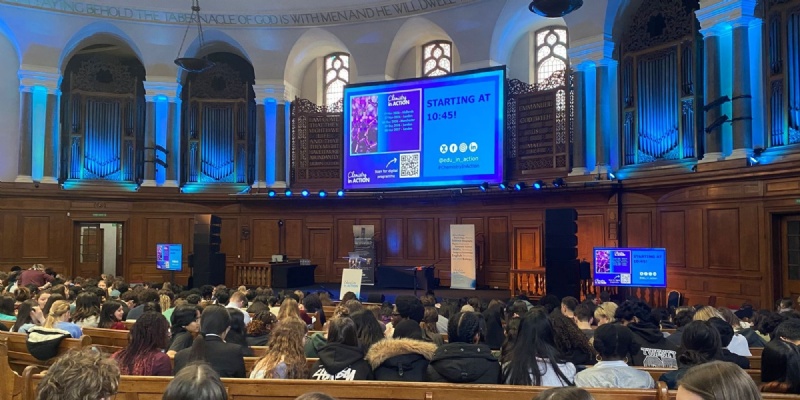
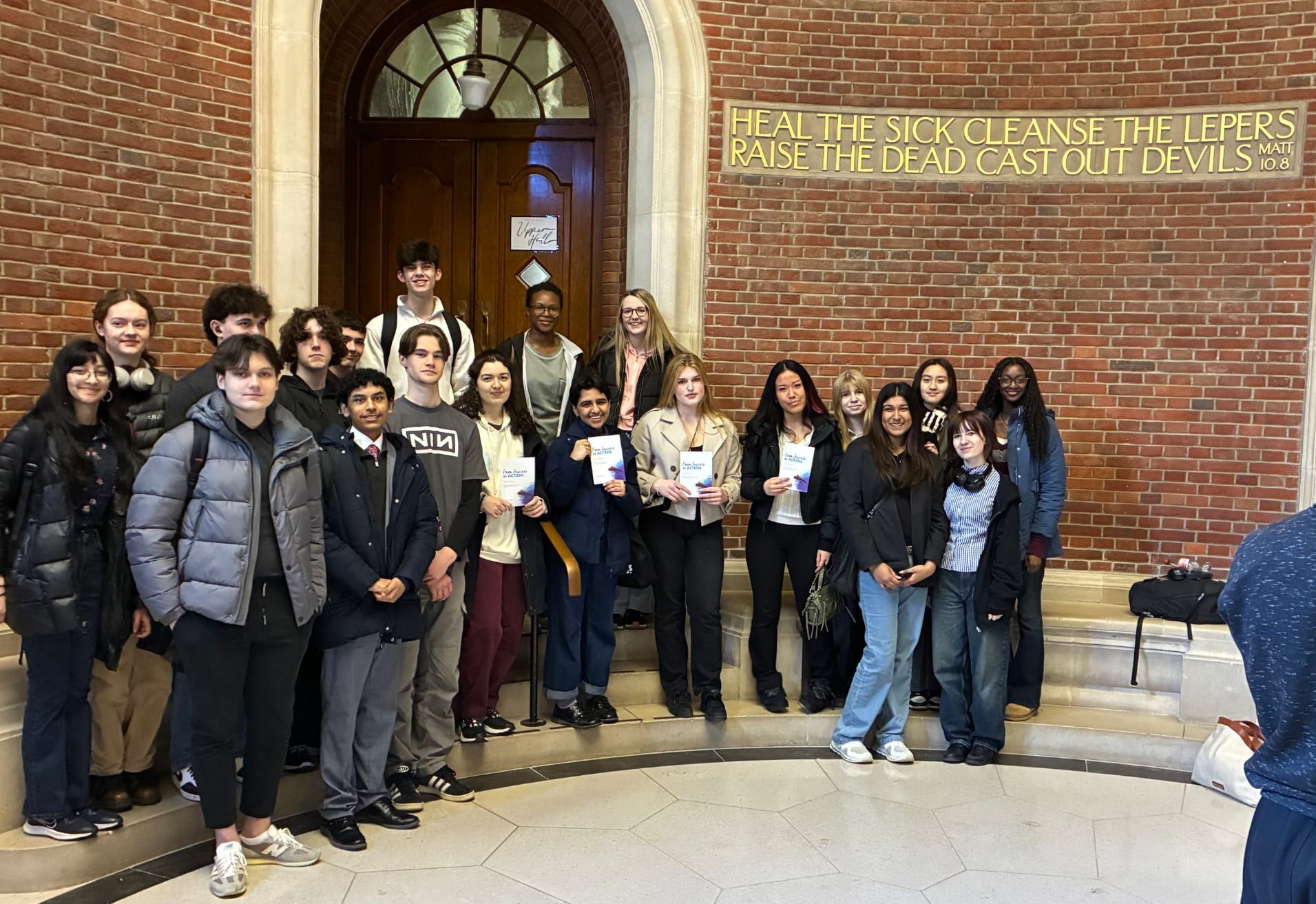
On the 10th March, around 20 IB Chemistry students attended a series of Chemistry in Action lectures in Emmanuel Centre.
As a student that attended myself, I must say that the lectures were really insightful in letting us students see where chemistry can take us after our Sixth Form studies!
My favourite lecture was by Dr Tim Gregory, a nuclear chemist whose lab work takes him to the forefront of clean energy production, nuclear medicine research, and space exploration. His talk focused on the afterlife of atoms and how nuclear ‘waste’ can actually save lives! For example, he informed us about a by-product of nuclear decay, called Actinium-225, which is used in targeted alpha therapy to treat (mainly) prostate cancer. Actinium-225 has a short half life of 10 days, so it emits intense alpha radiation for a shorter period of time, and we can harness this radiation to destroy cancerous cells. Targeted alpha therapy works by attaching a targeting molecule to Actinium-225, like an antibody, which can then detect and bind to cancer cells that share the complementary antigen for the antibody. The radioactive Actinium-225 can then deliver its high-energy radiation directly to the cancer cell and destroy it! A major advantage of this technique compared to chemotherapy is that the patient is less likely to get sick as the radiation is highly focussed on only the cancer cells. However, chemotherapy uses chemicals that travel throughout the entire bloodstream, which destroys cancer cells, but also damages healthy cells, causing the patient to fall ill during this treatment.
Our next lecture was by Dr Rianne Lord, an associate professor at the University of Warwick who’s leading a research project on the design of new metal-based drugs for the treatment of cancer. Her talk enlightened us about the role of metals in modern medicine, teaching us about metals like platinum, iron, and ruthenium. One of the things that really stood out to me was a platinum-based chemotherapy medication called Cisplatin. Cisplatin works by diffusing into the cell, through the cell membrane. Inside the cell, it is then aquated - this means that one of its ligands, in this case it’s a chlorine ligand, is substituted out for water. The aquated Cisplatin then travels through the nuclear envelope and interrupts base pairs in DNA, causing cell cycle arrest and apoptosis (programmed cell death).
Our penultimate lecture was by Dr Stephen Belding, which unmasked the secrets of smells and how tiny differences in molecular structure (such as isomers) can create vastly different aromas! We had a smelling station where students got to smell 3 different substances and pick which ones were the same, or if they were all different. Surprisingly, the results were quite spread out, and we soon learnt that genetics plays a huge part in what aromas we detect. We also learnt about R and S enantiomers of carvone, which have 2 very different smells! Think of enantiomers like your left and right hands. They are extremely similar, and the same in composition, but, if you were to shake someone’s hand, you would have a preference, right? A more chemistry-based approach would ask you if your 2 hands can be superimposed on each other – that means, can they both be laid over each other so that the 2 hands can be seen as combined? If you put both of your hands together so that they are perfectly aligned, you may notice that you need to turn one hand around so that it can be the mirror image of the other hand!
That’s the basis of enantiomers. They are nearly the same, but not quite, and in chemistry, this gives rise to a variety of different features. In carvone, the right enantiomer
(R-(-)-Carvone) has a spearmint scent whereas the left enantiomer (S-(-)-Carvone) smells like caraway seeds, sort of like rye bread. This is due to how our olfactory receptors register certain enantiomers. You can now see that something seemingly as simple as a left and right-handed compound, enantiomers, can drastically change how we detect and register certain smells!
The final lecture was by Dr Kathryn Harkup, a former chemist who dove into the dark side of the periodic table, exploring the chemistry behind once-trusted treatments now known to be deadly poisons. We discovered how infamous chemicals disrupt the body with sometimes fatal consequences. One chemical that we explored is called strychnine, which is derived from the seeds of the nux-vomica tree. It is a neurotoxin that primarily affects the motor nerve fibres in the spinal cord which control muscle contractions. An unfortunate victim of the poison would experience episodes of violent muscle contractions, rigid limbs, and an arched back (opisthotonos) while remaining conscious. These convulsions are often triggered by noise or light and can lead to asphyxiation, respiratory failure, and death.
Overall, I found these lectures truly fascinating, and I highly recommend them to any thinking of attending them in the future!
Isabelle Raphael, Year 12